19°C
in VARAIRE






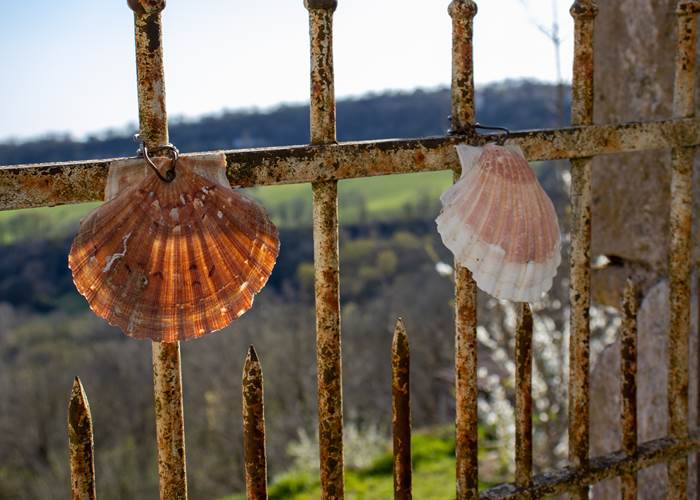
Le symbole du Chemin

Une Crédential originale
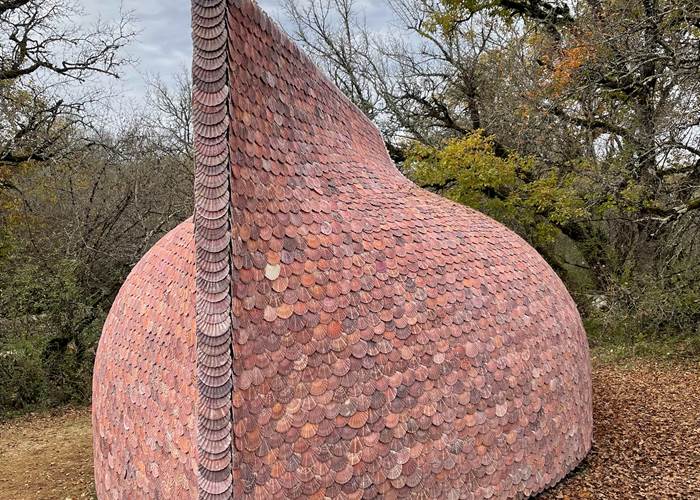
Pecten Maximus à Limogne
THE WAYS TO COMPOSTELA: Decoding the historical, political, and geographical realities that shaped this human adventure
The Origins of Pilgrimage: Between Faith, Miracle and Geopolitics
How did a forgotten tomb in Galicia become the spiritual center of gravity of medieval Europe?
The Invention of the Tomb (9th century)
It all began around 813 in a Europe undergoing profound transformation. The hermit Pelayo (or Pelagius), guided by mysterious lights—a "shower of stars" that would give rise to the popular etymology of Compostela ( Campus Stellae , the field of stars)—discovered an ancient tomb. The local Church, supported by King Alfonso II of Asturias, immediately recognized the remains of the apostle James the Greater , martyred in Jerusalem in 44 AD, whose body had miraculously washed ashore on the Galician coast.
The Engine of the Reconquista
At that time, northern Spain was the last Christian stronghold against Muslim Spain (Al-Andalus). Therefore, this discovery had a highly political dimension.
- The figure of Matamoros: Saint James is transformed. From a peaceful apostle, he becomes, in the medieval imagination, Santiago Matamoros (Saint James the Moor-Slayer), the patron saint and spiritual guide of Christian armies. The pilgrimage thus arises as much from a surge of faith as from a need to consolidate the borders of Christendom.
Institutionalization through the Codex Calixtinus (12th century)
For a pilgrimage to become a thousand-year-old tradition, it needs a guide. This is the role of the Codex Calixtinus (and in particular its Book V, attributed to the Poitevin monk Aimery Picaud). This manuscript dictates the routes to follow from France, describes the relics to be venerated, but also warns travelers against brigands, poisoned waters, and local customs. It is the first "pilgrim's guide" in history, which would definitively structure the four major French routes.
The Via Podiensis: The Royal Route of Puy-en-Velay
The Via Podiensis (the way to Le Puy), which is historically and geographically the most famous, the oldest and the most spectacular of the routes crossing France (the current GR®65).
Bishop Godescalc: The Pioneer (951)
The legitimacy of this route stems from its initiator: Godescalc , Bishop of Le Puy-en-Velay. In 951 , he was the very first documented non-Spanish pilgrim to undertake the journey. His official pilgrimage, accompanied by a vast entourage (troubadours, soldiers, clerics), paved the way and made Le Puy-en-Velay the major gathering point for pilgrims from Germany, Switzerland, and eastern France.
A Wild and Geological Journey
The territories crossed by the Via Podiensis offer a true lesson in geography:
- Velay and Margeride: A vertical start amidst the volcanic peaks of Puy, followed by the austere granite plateaus of Margeride.
- Aubrac: An endless grassy high plateau (over 1400 meters), a land of historical solitude where the bells of the Aubrac dome once rang in the mist to guide lost pilgrims.
- The Quercy and the Lot valley: A transition towards the limestone plateaus, which are drier and more Mediterranean.
A Jewel of Romanesque Art Classified by UNESCO
The success of the Via Podiensis also rests on the architectural gems born from this uninterrupted flow of walkers. Several key monuments are protected and are part of the "serial cultural property" inscribed on the UNESCO World Heritage List since 1998:
Notre-Dame du Puy Cathedral: Starting point of the route, famous for its Byzantine and Hispano-Moorish influences.
Conques Abbey Church: A crucial stop in the Aveyron region, famous for its Last Judgment tympanum and its Treasury (reliquary of gold and precious stones).
Cahors Cathedral:The Holy Shroud has been venerated in Cahors for centuries as the cloth that surrounded the head of Jesus during his burial and that was seen by Peter and John on Easter morning at the empty tomb.
Cloître de Moissac : Chef-d'œuvre de l'art roman avec ses 76 chapiteaux sculptés, offrant une halte spirituelle et artistique dans le Tarn-et-Garonne.
The Via Podiensis thus created a true cultural and economic "backbone" across the south of France, linking isolated sanctuaries to transform them into major staging towns before the regrouping of the routes at Ostabat, then the crossing of the Pyrenees at Saint-Jean-Pied-de-Port.
The Camino de Santiago is not just a collection of hiking trails, but the first major European network of communication and cultural exchange, where faith literally sculpted the landscape and architecture of the Middle Ages.
Varaire, a historic stop between Cajarc and Cahors
In Varaire, a village crossed by three GR® trails, you are initially on the most famous of them, the GR®65 . You have 1208 km left to reach Santiago de Compostela, having left approximately 15 days earlier from Le Puy-en-Velay (or a month earlier from Geneva via the Via Gebennensis).
You'll discover the Lot region and the Causse du Quercy, a UNESCO World Heritage site, so unique with its downy oaks everywhere and its stones everywhere too. The farmers here say: "the stones, they grow in the fields."
After Figeac and its celebrity Champollion, after Cajarc and its celebrities, Sagan, Coluche and Pompidou, the Limogne region awaits you, more discreet and yet so lively, for a beautiful stopover which will allow you to discover a large quantity of elements of the rural heritage built in dry stone, walls, cazelles and gariottes and beautiful dolmens some of which are classified.
Two other GR ®
The GR® 36 trail opens the doors to the Pyrénées-Orientales region, passing through Saint-Cyr-Lapopie, Villefranche-de-Rouergue, Cordes-sur-Ciel, Carcassonne, and the Pic de Bugarach, before ending in Bourg-Madame and Puigcerdà on the Spanish side. You will have crossed France from north to south, from the beaches of Normandy to the foothills of the Pyrenees.
The GR®46 trail opens the doors to Toulouse, passing through the region via Saint-Cyr-Lapopie, Caylus, and Saint-Antonin-Nobleval. From the Loire Valley, with its vineyards and majestic châteaux, to the verdant hills of Berry, each stage offers unique panoramas. A descent from Tours to Toulouse for a journey back through French history.
All pilgrims, walkers, hikers, cyclists or horse riders are welcome at L'Escale de Varaire.
A more personal message to the pilgrims staying at L'Escale de Varaire
The purpose of a Credential
On the Camino de Santiago, the Credential is essential to prove your status as a pilgrim and access the accommodations and special rates reserved for you, because walking the Camino de Santiago is not like any other hike!
In the past, bishops issued pilgrims a certificate that allowed them to travel, while also authenticating their status as pilgrims.
It made it possible to distinguish the true pilgrims from those who took the road to flee their families, their misdeeds or their military duties…This letter of credence attested to the status of pilgrim of the one who held it, inviting the various authorities, the Church and all the men encountered on the way to offer him help and protection.
Today, it helps distinguish the true pilgrim from the mere tourist on a hike. It encourages respect for the people who welcome you and the rules of their accommodations, very often their own home.
The credential (issued by associations and other secular organizations) or the credential (issued by the Church) are its successors. It is not necessary to be Christian to apply for one. It must be stamped at each stage by your accommodation provider, a tourist office, the parish priest, the town hall, or the police.
It allows the contemporary pilgrim, walker, cyclist or horseman traveling to Compostela:
✨ to access the accommodations reserved for him with the benefit of special rates (mandatory document in Spain and recommended in France as well as in other countries),
✨ to obtain the Compostela (pilgrimage certificate) upon arrival in Santiago de Compostela (issued under certain conditions),
✨ to keep a cherished memory of his unforgettable journey…
Pilgrim! On the Way of St. James, you agree to respect the facilities that are provided voluntarily and/or selflessly for your use. You contribute as much as possible to the upkeep of the hostels by making a fair financial contribution. You respect the posted closing times for the shelters. You also respect nature, the property of others, and the hospitality of the people who welcome you.
Have a good trip, Ultreia e sus eia!